
Titanium dental implants offer an effective solution for replacing missing teeth. Learn what they are, how they work, and why they’re preferred for their biocompatibility and durability.
In a nutshell
- Titanium dental implants offer excellent biocompatibility .
- Titanium is known for its high strength and ability to integrate with bone tissue.
Why choose titanium for dental implants?
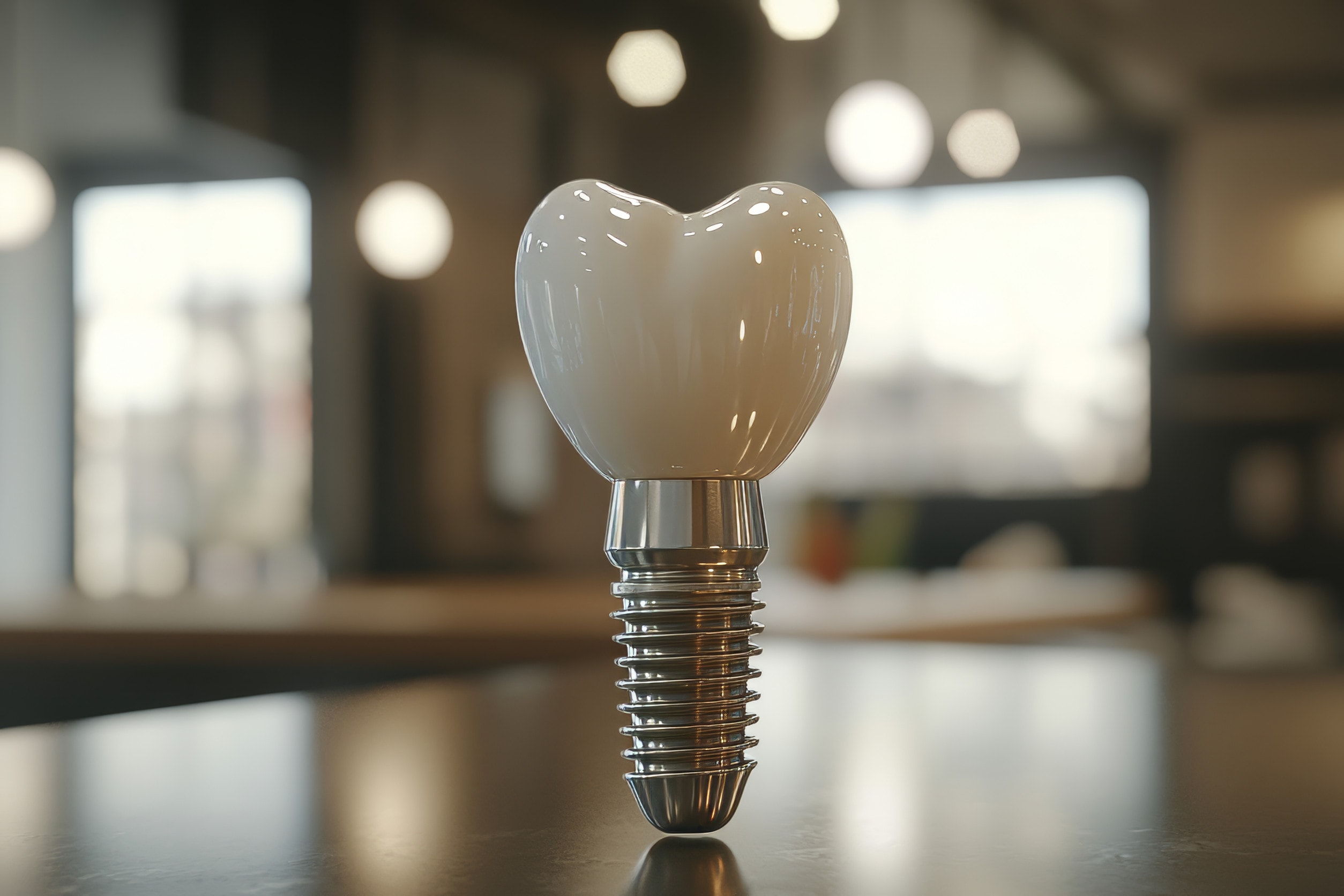
Titanium is considered an ideal choice for dental implants due to its ability to adapt to the human body without causing adverse reactions . This material is highly biocompatible, meaning it is easily accepted by the body and reduces the risk of rejection.
Additionally, grade 4 titanium , commonly used for implants, is known for its strength and lightness , as well as being resistant to oxidation .
Biocompatibility of titanium
Titanium is highly biocompatible , which means it significantly reduces the risk of adverse reactions in the human body . This material integrates easily with bone tissue, facilitating the osseointegration process and reducing the risk of rejection . Its hypoallergenic nature makes it suitable for most patients, avoiding allergic reactions.
In very rare cases, titanium can cause intolerance, but these incidents are extremely rare. Titanium’s biocompatibility is one of the main reasons it is chosen for dental implants, ensuring long-lasting durability and perfect integration with the bone.
Strength and durability
Titanium is known for its high resistance to chewing loads, making dental implants functional and robust. Titanium dentures can last over 25 years, demonstrating excellent longevity and strength.
However, it is important to maintain good oral hygiene to prevent bacterial colonization on the porous surface of titanium.
Stability and functionality
Titanium implants provide superior stability , allowing optimal chewing function without compromising neighboring teeth . This allows missing titanium dental implants to be replaced without having to modify adjacent teeth, preserving their integrity.
Additionally, titanium implants help maintain the alignment of natural teeth, preventing unwanted shifts.
Aesthetics and naturalness
Titanium implants can be covered with ceramic crowns that perfectly mimic natural teeth, offering excellent aesthetic results . Although the gray color of titanium may seem unsightly, ceramic crowns completely hide the implant, ensuring a natural and beautiful smile.
Reduction of the risk of rejection
Titanium’s biocompatibility significantly reduces the risk of rejection, making it a safe and reliable choice for dental implants. Thanks to titanium’s ability to integrate well with bone tissue , the risk of adverse reactions is minimized, ensuring a successful and long-lasting result.
Maintenance of titanium dental implants
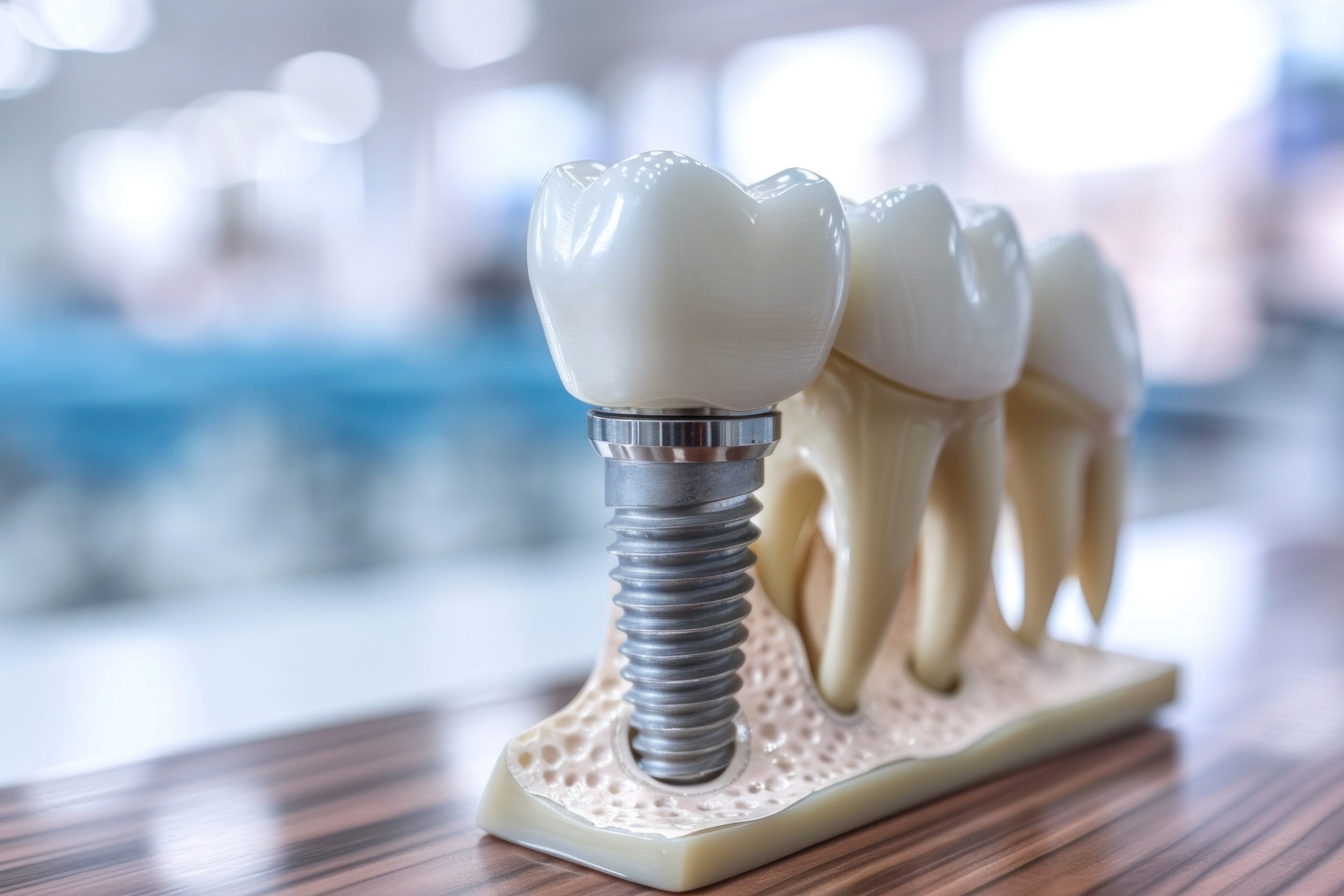
To keep dental implants in good condition, it’s essential to regularly follow your dentist’s instructions . Implant care must be consistent and similar to that of natural teeth, with particular attention to oral hygiene to avoid plaque and inflammation .
The critical area for implant hygiene is the margin between the gum and the implant site , and recommended tools include a toothbrush, dental floss, and interdental brushes . Factors such as oral hygiene and regular checkups influence the longevity of the dental implant.
Daily oral hygiene
Avoiding plaque and tartar is essential to maintaining the integrity of dental implants. It’s important to gently clean the area around the implant to prevent inflammation.
Using antiseptic mouthwashes , such as those containing chlorhexidine , can help maintain implant hygiene. Professional dental cleanings help remove plaque buildup around implants.
Regular visits to the dentist
Regular dental visits are crucial for monitoring the health of your dental implants and identifying any problems early . These visits allow you to check the condition of your implants and ensure there are no signs of inflammation or infection.
Monitoring the health of your dental implants through regular visits helps identify any problems early and intervene before they become serious . This ensures long-lasting and functional implants.
Differences between titanium and zirconium dental implants
| Characteristic | Titanium Implants | Zirconium Implants |
|---|---|---|
| Biocompatibility | Excellent, with optimal integration with the bone | Very good, but slightly inferior to titanium |
| Aesthetics | Gray in color, can cause dark halos under thin gums | White and natural appearance, similar to real teeth |
| Resistence | High resistance to chewing loads | Good, but less resistant than titanium |
| Duration | It can last over 25 years with proper maintenance | Good durability, but potentially inferior to titanium |
| Risk of Rejection | Very low thanks to biocompatibility | Low, but slightly higher than titanium |
| Cost | Generally more accessible | Generally more expensive due to aesthetic features |
| Usage | Preferred for most clinical cases | Chosen for specific aesthetic needs |
The most common materials used for dental implants are titanium and zirconium. The choice between titanium and zirconium implants is influenced by health conditions, aesthetic needs, and personal preference.
While titanium can exhibit metallic sheen, zirconium has a white, natural appearance, making it a preferred aesthetic choice for many patients.
Pros and cons of titanium
Titanium dental implants offer excellent osseointegration and biocompatibility , making them a safe and reliable choice. However, a negative aesthetic aspect of titanium is its gray color, which can cause a dark halo , especially if the gums are thin.
Pros and cons of zirconium
Zirconium is biocompatible and has an aesthetic similar to natural teeth, with a smooth surface that makes it a popular choice for patients with metal sensitivity. However, it is less strong than titanium , which can affect its durability and ability to withstand high loads.
Costs of titanium dental implants
Costs of titanium dental implants in various European countries
| Village | Average cost of a titanium implant (€) |
|---|---|
| Italy | 1,000 – 3,000 |
| Spain | 900 – 2,500 |
| Germany | 1,200 – 3,500 |
| United Kingdom | 1,500 – 4,000 |
| Albania | 500 – 1,500 |
| Romania | 600 – 1,800 |
| Türkiye | 700 – 2,000 |
The costs associated with titanium dental implants can vary greatly depending on the individual treatment needs. The cost of a single titanium dental implant ranges from €1,000 to €3,000.
The price of titanium dental implants is influenced by various required treatments and additional components. Each case is unique, and costs may cover different aspects and treatments.
Factors that influence the price
The final cost of a dental implant is influenced by several factors , including the doctor’s availability, the number of appointments booked, and the complexity of the procedure. When treating an entire arch of teeth, prices tend to increase.
Factors that influence the price of a titanium dental implant
| Factor | Description |
|---|---|
| Doctor’s availability | The dentist’s experience and reputation can affect costs. |
| Number of appointments | Multiple appointments may increase the total cost of treatment. |
| Complexity of the intervention | Complex interventions require more time and resources, increasing costs. |
| Materials used | The quality of materials, such as the type of titanium, can influence the price. |
| Technology used | The use of advanced technologies can affect the final cost of treatment. |
| Location of the study | Costs may vary depending on the region or city. |
| Add-ons | The need for dentures or crowns can increase the total cost. |
| Pre-existing conditions | Additional treatments for pre-existing oral conditions may be necessary. |
It is therefore important to consult a specialist for a detailed estimate that considers all the solutions at play along the way.
Possible financing options
Patients can choose from several payment options for dental implants, such as direct payment or installment plans . Payment methods may include credit cards, bank transfers, or cash, depending on the dental practice’s policies.
Financing plans are available that allow patients to spread the cost of dental implants, making the treatment more affordable.
Conclusion
Titanium dental implants are an excellent solution for those seeking a stable and long-lasting smile. Their biocompatibility, strength, and ability to integrate with the bone make them an ideal choice. In addition to offering a natural aesthetic result, they significantly reduce the risk of rejection and can last a lifetime if properly maintained.
When considering dental implants, it’s essential to consult a professional to assess your specific needs and obtain a personalized treatment plan. Whether replacing a single tooth or rehabilitating an entire arch of teeth, titanium implants offer an effective and long-lasting solution that can significantly improve your quality of life.
FAQ
How long does a titanium dental implant last?
A titanium dental implant can last over 25 years and, with proper care, even for the patient’s lifetime. Maintaining proper oral hygiene and following your dentist’s recommendations are essential.
How much does a titanium dental implant cost?
The cost of a titanium dental implant ranges from €1,000 to €3,000, depending on the specific treatment needs and any additional components required.
What are the advantages of titanium dental implants over other materials?
Titanium dental implants have numerous advantages, including remarkable biocompatibility and greater strength and durability than other materials.
How do you maintain a titanium dental implant?
To keep a titanium dental implant in good condition, it is essential to practice proper oral hygiene with brushing, flossing, and antiseptic mouthwashes, as well as regular professional dental cleanings.
What are the possible disadvantages of titanium compared to zirconium?
Titanium can be less aesthetically pleasing than zirconium, as it has a grey color that can be unpleasant for thin gums, while zirconium offers a more natural appearance, similar to real teeth.
