
Are you considering getting a dental implant? This article will explain the cost of the procedure.
In a nutshell
- The cost of dental implants in Italy in 2025 ranges between €1,200 and €3,000 for a single tooth, influenced by factors such as materials, complexity of the procedure, and region.
- Dental implant expenses are tax deductible at a rate of 19% , making the investment more affordable for many people.
- Dental tourism offers cost savings , but can also involve significant risks , so you need to choose your facility and dentist carefully.
The Ultimate Guide to Dental Implant Costs in Italy in 2025
| Region | Average Cost of a Single System | Average Cost of a Full Dental Arch |
|---|---|---|
| Northern Italy | 1,500 – 6,000 euros | 5,000 – 30,000 euros |
| Central Italy | 1,800 – 3,500 euros | 4,500 – 25,000 euros |
| Southern Italy | 1,200 – 2,500 euros | 4,000 – 20,000 euros |
| Türkiye | 500 euros | 4,000 – 8,000 euros |
| Croatia | 800 euros | 5,000 – 10,000 euros |
| Hungary | 700 euros | 4,500 – 9,000 euros |
| Poland | 600 euros | 4,000 – 7,500 euros |
| Romania | 550 euros | 4,200 – 8,500 euros |
In 2025, the cost of a complete dental implant, including a crown, can vary significantly, ranging from €1,200 to €3,000 for a single tooth . This wide price range is due to various factors that influence the final cost, such as the amount of available bone, the condition of the soft tissue, and the technologies used by dental clinics.
Clinics that utilize advanced technologies are able to offer less invasive procedures and faster recovery times, which may justify the higher costs and better service.
Price differences can also be significant between different regions of Italy . For example, northern regions tend to have higher prices than central and southern Italy.
Price aside, it’s important to remember that dental implant costs are tax deductible , with a 19% tax credit applicable, making the investment more affordable for many people.
Factors that influence the cost of dental implants
| Factor | Description |
|---|---|
| Materials used | Titanium, titanium alloys, and zirconium are the most common materials. The choice between these affects price and durability. |
| Complexity of the procedure | Additional procedures such as bone grafts or bone regeneration may increase costs. |
| Surgeon’s experience | An experienced dentist guarantees high-quality treatment, which influences the final cost. |
| Region | Prices vary between regions of Italy, with the North generally more expensive than the Center and South. |
| Technologies used | The use of advanced technologies can justify higher costs thanks to less invasive procedures and faster recoveries. |
| Patient’s conditions | The condition of the patient’s bone and soft tissue may require preparatory treatments that influence the cost. |
The cost of dental implants can vary significantly depending on several factors, including the materials used, the complexity of the procedure, and the surgeon’s experience. Each patient is unique and requires a personalized treatment plan that influences the final cost of the implant. The quality of the materials, the technique used, and the condition of the patient’s mouth are just some of the variables that can determine the final price of dental implants.
For example, additional procedures such as bone grafting can increase the overall cost of a dental implant by €500 to €2,500, depending on the complexity of the case. Furthermore, the dentist’s professionalism and level of training can influence both the health of the implants and their cost.
Let’s now delve deeper into each of these factors to better understand how they influence the cost of dental implants.
Materials used for the systems
The most common materials include titanium, titanium alloys, and zirconium . The choice between these materials can significantly affect the price: for example, medical-grade grade 4 titanium is known for its high quality and durability, but it is more expensive than other materials.
In addition to titanium, ceramic materials such as zirconia are often used to ensure superior aesthetics and greater biocompatibility . Choosing high-quality materials not only affects the initial cost but can also contribute to greater longevity and success of the implants, reducing the need for future replacements and maintenance.
The quality of the materials is therefore a long-term investment in dental health and aesthetics.
Complexity of the procedure
Preparatory treatments such as bone regeneration can significantly increase overall costs. For example, if the patient has insufficient bone volume , a bone graft may be necessary , which not only increases the cost but also the recovery time.
Compromised gum conditions may require additional interventions , such as gum tissue grafts, which further increase the cost of the procedure. Management of the tissue around the implant is crucial to the success of the procedure and can affect both the cost and duration of treatment.
Each case is unique and requires a thorough evaluation to determine the best possible treatment plan.
Surgeon’s experience
An experienced dentist guarantees the use of certified materials, cutting-edge technologies, and personalized treatment . Choosing a dental practice with a high level of professionalism, experience, and integrity is essential to ensuring the success of the procedure.
Professional development through courses and conferences is expensive, but it’s essential to maintaining high quality standards . An incorrect implant placement can negatively impact the aesthetic and functional outcome, making the surgeon’s experience a significant investment in the patient’s long-term health.
Average prices for dental implants in different regions of Italy
| Region | Average Cost of a Single System | Average Cost of a Full Dental Arch |
|---|---|---|
| Lombardy | 1,500 – 6,000 euros | 5,000 – 30,000 euros |
| Veneto | 1,500 – 5,500 euros | 5,000 – 28,000 euros |
| Emilia-Romagna | 1,600 – 5,800 euros | 5,200 – 29,000 euros |
| Lazio | 1,800 – 3,500 euros | 4,500 – 25,000 euros |
| Tuscany | 1,700 – 3,400 euros | 4,600 – 24,000 euros |
| Campania | 1,200 – 2,500 euros | 4,000 – 20,000 euros |
| Sicily | 1,300 – 2,600 euros | 4,200 – 21,000 euros |
In Italy, dental implant prices can vary greatly depending on the region . Northern regions tend to have higher costs than central and southern Italy .
For example, in Northern Italy, prices for a dental implant can reach up to 6,000 euros on average per tooth, according to the dental implant price list.
In Central Italy , the costs for a dental implant are generally between 1,800 and 3,500 euros .
In the South , it is possible to find more accessible prices, with estimates starting from the price of a system up to 2,500 euros for a single system .
These price differences can be attributed to various factors, including the cost of living, demand for dental services, and the availability of qualified professionals in each region. Choosing the right region for your treatment can make a big difference in the final cost.
Cost of a complete dental implant
The cost of a full dental implant can vary greatly depending on the complexity of the case and the materials used. In 2025, we said the average cost for a full dental implant, including a crown, ranges between €1,200 and €3,000. However, for a full arch of teeth, costs can range between €4,000 and €30,000 .
These costs include not only the implant and crown, but also specialist examinations and pre- and post-operative check-ups. Soft and hard tissue management is crucial to the implant’s success and can affect the price.
Let’s now look at the specific costs for a single dental implant and for an entire arch.
Single dental implant
The cost of a single-tooth dental implant in Italy generally ranges between €1,200 and €3,000 . This price range covers the surgery, X-rays, computed tomography (CT), and the zirconium and ceramic crown .
Before surgery, checks are necessary to determine the number of screws and crowns needed and to assess the bone’s ability to support the implant as a base. These checks add to the total cost of the implant, but they are essential for placing an implant and ensuring the success of the procedure and the implant’s durability.
System for an entire arch
When it comes to full arch treatments, costs can vary significantly depending on the number of implants needed and any additional procedures required. For example, insufficient bone volume may require grafting or regeneration procedures , increasing both costs and recovery time. However, full arch treatments may benefit from discounts when choosing comprehensive packages.
The price for a full arch of teeth can range between €4,000 and €30,000 , depending on the complexity of the case and the materials used. This investment may seem high, but given the improved quality of life and the durability of the implants, many patients find it worth it.
Dental tourism: savings and risks
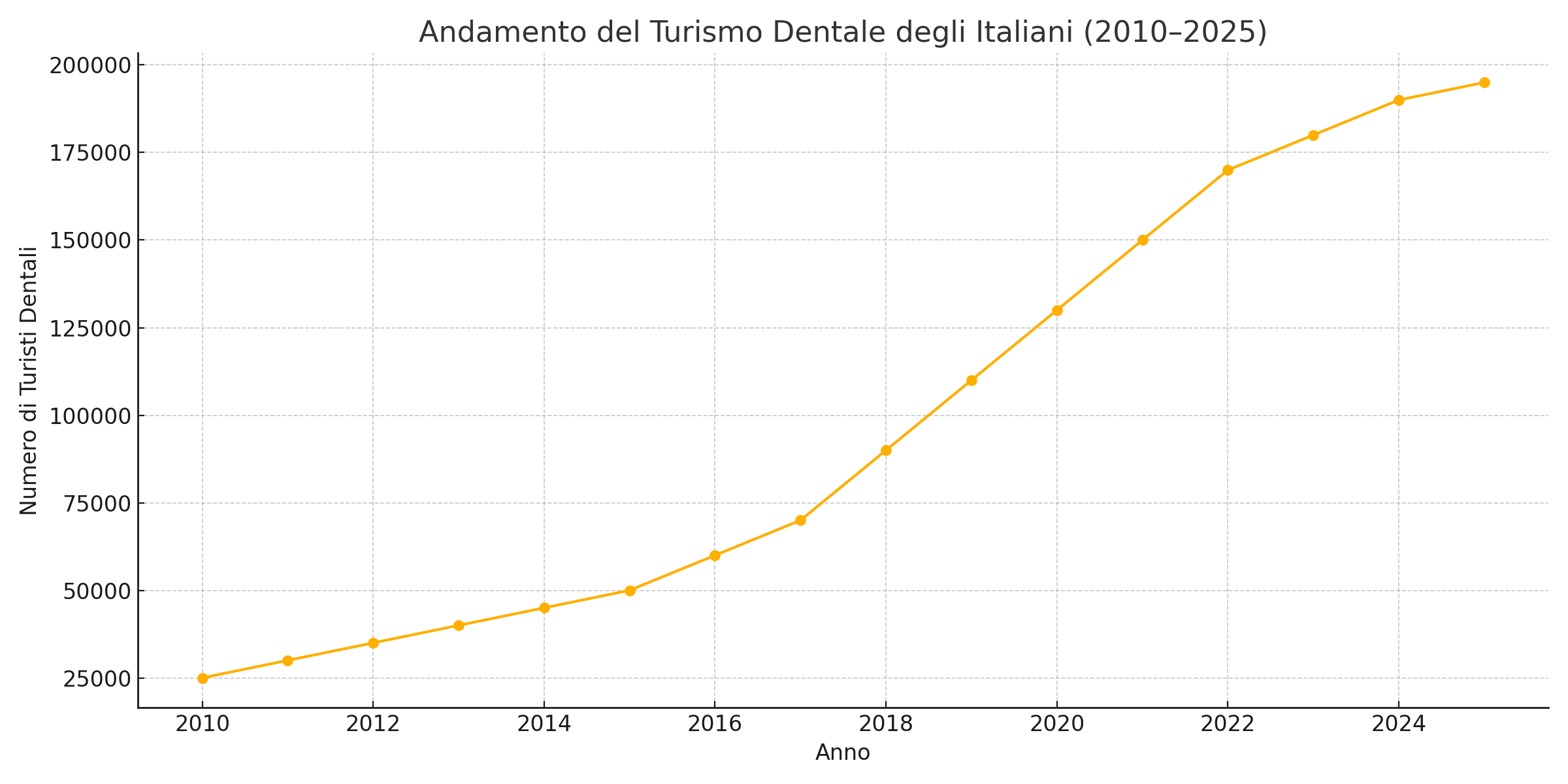
Dental tourism has become an increasingly popular phenomenon , with many people seeking lower-cost dental treatment abroad. Research in this area shows growing interest in available options , including visits to specialized clinics.
Countries like Croatia, Turkey, and Albania are popular destinations for dental tourism. One of the main advantages of dental tourism is the significant cost savings for dental implants compared to Italy .
However, dental tourism also carries significant risks . Variable quality of services and difficulties with post-operative care are just some of the problems patients may encounter. It’s essential to carefully consider these factors before deciding to travel abroad for dental treatment.
Dental implant prices abroad
| Village | Average Cost of a Single System | Average Cost of a Full Dental Arch |
|---|---|---|
| Türkiye | 500 euros | 4,000 – 8,000 euros |
| Croatia | 800 euros | 5,000 – 10,000 euros |
| Hungary | 700 euros | 4,500 – 9,000 euros |
| Poland | 600 euros | 4,000 – 7,500 euros |
| Romania | 550 euros | 4,200 – 8,500 euros |
In countries like Turkey and Croatia, dental implant costs can be significantly lower than in Italy . For example, the cost of a dental implant in Turkey is around 500 euros, while in Croatia a single dental implant can cost around 800 euros. Croatia is known for its affordable dental treatment prices, thanks to a lower cost of living compared to Italy.
Despite the financial savings, it’s important to consider whether the lower costs justify the trip and the potential associated risks . The quality of care and continuity of post-operative care are factors that should not be overlooked . Furthermore, it’s crucial to consider the cost of implementing these choices.
Risks of dental tourism
While dental tourism can offer significant savings, it also carries risks that should not be underestimated. Dental clinics abroad do not always meet hygiene standards, increasing the risk of infection. Furthermore, lack of continuity in dental care is a significant risk for patients visiting clinics abroad.
Difficulty receiving post-operative care may force patients to return to Italy to resolve complications. Furthermore, communication misunderstandings can arise due to the language barrier, increasing the risk of medical errors. These risks must be carefully considered before opting for dental tourism.
Tax deductibility of dental implants
In Italy, the cost of a dental implant is tax deductible, with a 19% tax credit applicable . Dental implant expenses can be deducted up to 19% on your tax return , making the investment more affordable for many people. To claim these deductions, you must retain all invoices for dental treatments and prescription drug purchases.
The tax deduction for dental implants also applies to dependents. However, it’s important to note that the deduction only applies after deducting a deductible of €129.11 . Reporting these expenses as medical expenses on your tax return can help significantly reduce the final cost of dental implants.
Tax deductibility for dental procedures abroad
In Italy, the 19% tax deductibility for dental expenses also applies to procedures performed abroad, provided they are properly documented . It is essential to retain all invoices and documentation relating to dental treatments received in other countries. Furthermore, the documents must be translated into Italian and clearly state the type of procedure performed and the cost incurred.
Alternative solutions to dental implants
Not everyone can afford to invest in dental implants. Fortunately, there are alternative solutions that can be just as effective. Removable dentures are an economical solution for those who cannot afford dental implants . These dentures can be easily removed and reinserted, offering the patient flexibility.
Other oral rehabilitation techniques include the use of dental bridges and crowns , which can be more cost-effective than implants. Let’s explore these alternative options in detail.
Removable prostheses
Removable partial dentures are a suitable solution for patients who are missing teeth but not the entire arch , offering a certain stability during wear. However, these dentures must be removed for cleaning and can be less stable, sometimes causing discomfort when fitting.
Removable dentures represent a more affordable alternative to dental implants, ideal for those with missing teeth and looking to improve their quality of life without facing the high cost of implants.
Other oral rehabilitation techniques
Dental bridges are a common solution for replacing missing teeth by bridging the gap with prepared adjacent teeth. These bridges can be used to fill spaces left by missing teeth, reducing the need for complex surgery.
Fixed dentures can be a long-lasting and affordable solution for patients who don’t want or can’t afford implants. Overdentures combine dentures and mini-implants, offering stability and ease of removal, especially for patients with insufficient bone.
Maintenance and durability of dental implants
A dental implant has an average lifespan of 15 to 25 years . This life expectancy is quite significant. Over 95% of dental implants have a survival rate of 10 years . To increase the lifespan of a dental implant, it is important to maintain good oral hygiene and undergo regular dental checkups.
Regular visits to the dentist are essential to monitor the well-being of dental implants and prevent complications.
Routine maintenance
Using a soft-bristled toothbrush is highly recommended to protect dental implants during cleaning. Using dental floss specifically designed for dental implants helps maintain gum health and prevent plaque buildup.
Proper oral hygiene is essential to ensure the longevity of dental implants and prevent complications.
Frequency of checks
Dental visits are essential for monitoring the health of your dental implants. Visits should be scheduled every six months to monitor the health of your dental implants.
During regular checkups, your dentist may perform professional cleanings to remove tartar and plaque, which cannot be removed at home.
Conclusion
In conclusion, the cost of dental implants in Italy in 2025 varies significantly based on multiple factors, such as the materials used, the complexity of the procedure, and the surgeon’s experience. The average price for a single dental implant ranges from €1,200 to €3,000, while for a full arch, the cost can reach up to €30,000. It’s also essential to consider regional differences and the savings opportunities offered by tax deductibility.
There are also alternatives to dental implants, such as removable dentures and dental bridges, which can be more economical options. Maintaining good maintenance and scheduling regular checkups are essential to ensuring the longevity of your implants.
FAQ
What is the average cost of a dental implant in Italy in 2025?
The average cost of a dental implant in Italy in 2025 is between 1,200 and 3,000 euros per single tooth.
What materials are used for dental implants?
Dental implants are commonly made of titanium and zirconium, materials known for their biocompatibility and durability.
What is the tax deductibility for dental implants?
The tax deductibility for dental implants allows you to recover up to 19% of the expenses incurred through your tax return.
What are the risks of dental tourism?
The risks of dental tourism include variable quality of care and the possible lack of adequate post-operative care.
What are the alternatives to dental implants?
Alternatives to dental implants are removable dentures and dental bridges. Both offer effective solutions for restoring dental function and aesthetics.
