
If you’re considering a hair transplant to improve your look, or simply want more information about this type of procedure, this article will provide you with everything you need to get a more complete overview of the topic.
In a nutshell
- Hair transplantation is a surgical procedure that involves the transfer of hair follicles from dense to thinning areas of the scalp.
- The two most commonly used transplant techniques are FUT and FUE .
- Choosing the right clinic and surgeon is crucial ; hair transplantation is generally safe, but requires high standards of safety and professional expertise to minimize risks and ensure optimal results.
How a hair transplant works
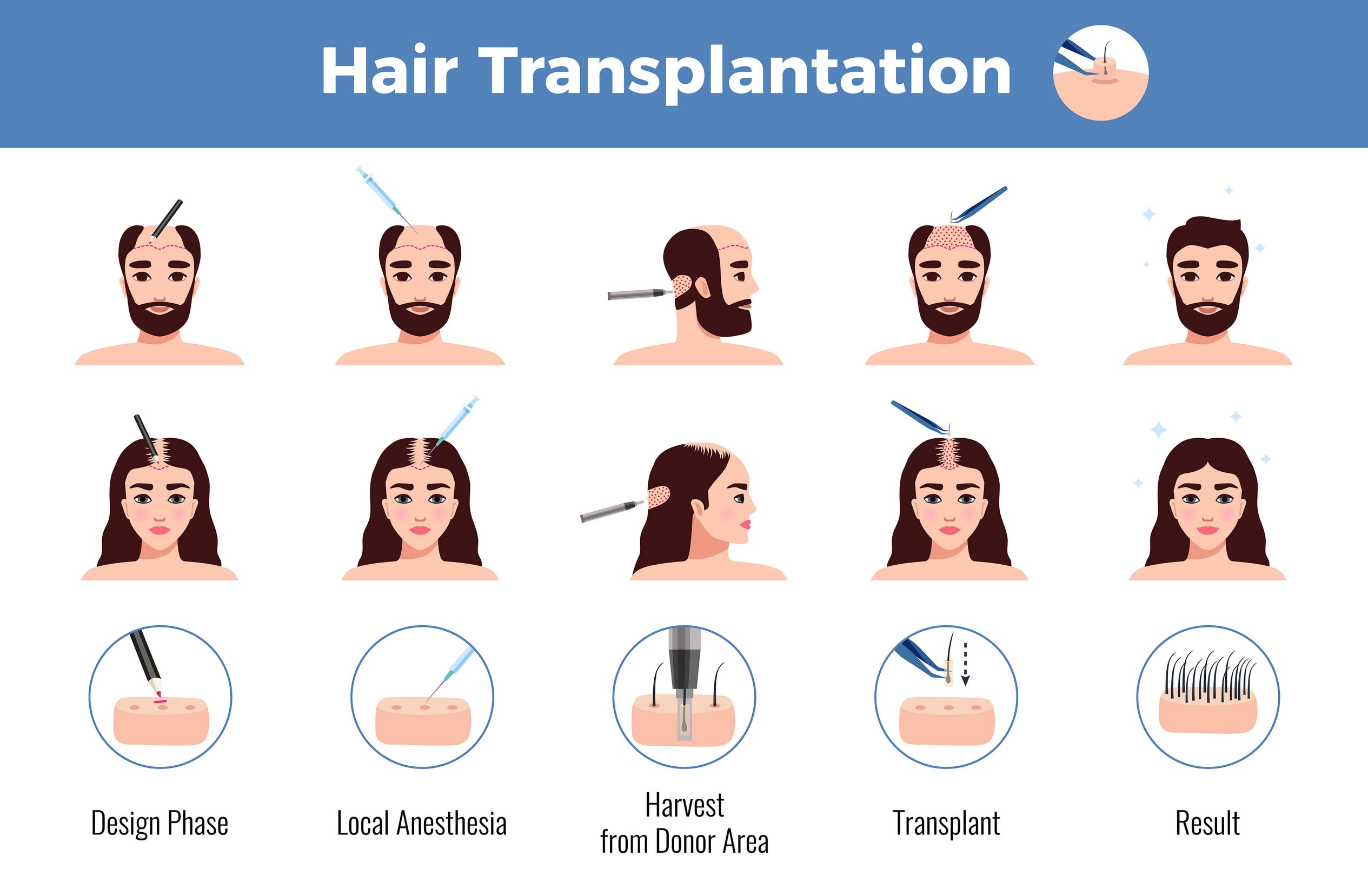
A hair transplant is a surgical procedure designed to address baldness , a condition that can profoundly affect a person’s quality of life.
But how does a hair transplant work? Hair follicles are removed from areas of the scalp where hair is abundant and transferred to the thinning or balding areas.
This procedure is considered a delicate operation and requires a careful assessment of the benefits and risks before proceeding.
The stages of hair transplantation
The main stages of hair transplantation include:
- A pre-operative phase , during which the surgery is planned.
- A surgical phase , in which the follicles are removed and implanted.
- A post-operative phase , during which the patient’s recovery is monitored.
Below, we will explain them in detail.
Pre-operative phases
During the preoperative phase, the surgeon conducts an initial consultation to define the patient’s expectations and assess their suitability for the procedure . Part of this preparation includes detailed planning of the procedure, often using drawings and photographs to discuss the goals and treatment options.
Before the transplant, blood tests and an electrocardiogram are required to ensure the patient’s health . Taking an oral antibiotic is also recommended from the day before surgery and for 4-5 days afterward to prevent infections.
Shaving the donor and recipient areas is recommended , although not strictly necessary, to facilitate the collection and grafting of the follicles.
The surgical procedure
The surgical procedure of a hair transplant begins with cleaning the scalp areas and applying local anesthesia to make the process painless.
During the procedure, instruments such as scalpels or needles are used to remove follicular units from the donor area and prepare them for grafting into the thinning areas . Clinics must follow strict protocols to ensure a sterile and safe environment, essential for performing a safe hair transplant.
The implantation of the follicular units occurs through small incisions in the recipient areas where the grafts are inserted.
The overall duration of a hair transplant can vary, but is generally around 6 hours , during which up to 3500 follicular units can be treated .
The technique used, such as FUT or FUE, can influence the duration of the procedure and the number of follicles treated.
Throughout the procedure, a team of professionals, including a specialized surgeon, guides the patient, ensuring that every step is performed with precision and care. Patient safety and comfort are top priorities, and every detail is taken care of to ensure optimal results.
Post-operative phase
Immediately after the procedure, a covering is applied to the donor area , and small scabs may form which will fall off within a week .
It is normal to experience swelling and redness in the treated area, which usually resolves within 3-4 days . During this time, the patient should follow the doctor’s instructions , which may include taking painkillers and using specific shampoos after 2 days.
Postoperative follow-up is essential to monitor recovery and prevent any complications . Follow-up visits take place 3, 6, and 9 months after surgery and are usually free . Detailed monitoring can also be done through digital platforms like WhatsApp.
Although temporary hair loss is normal after surgery , regrowth will follow, leading to the desired results.
Hair transplant techniques
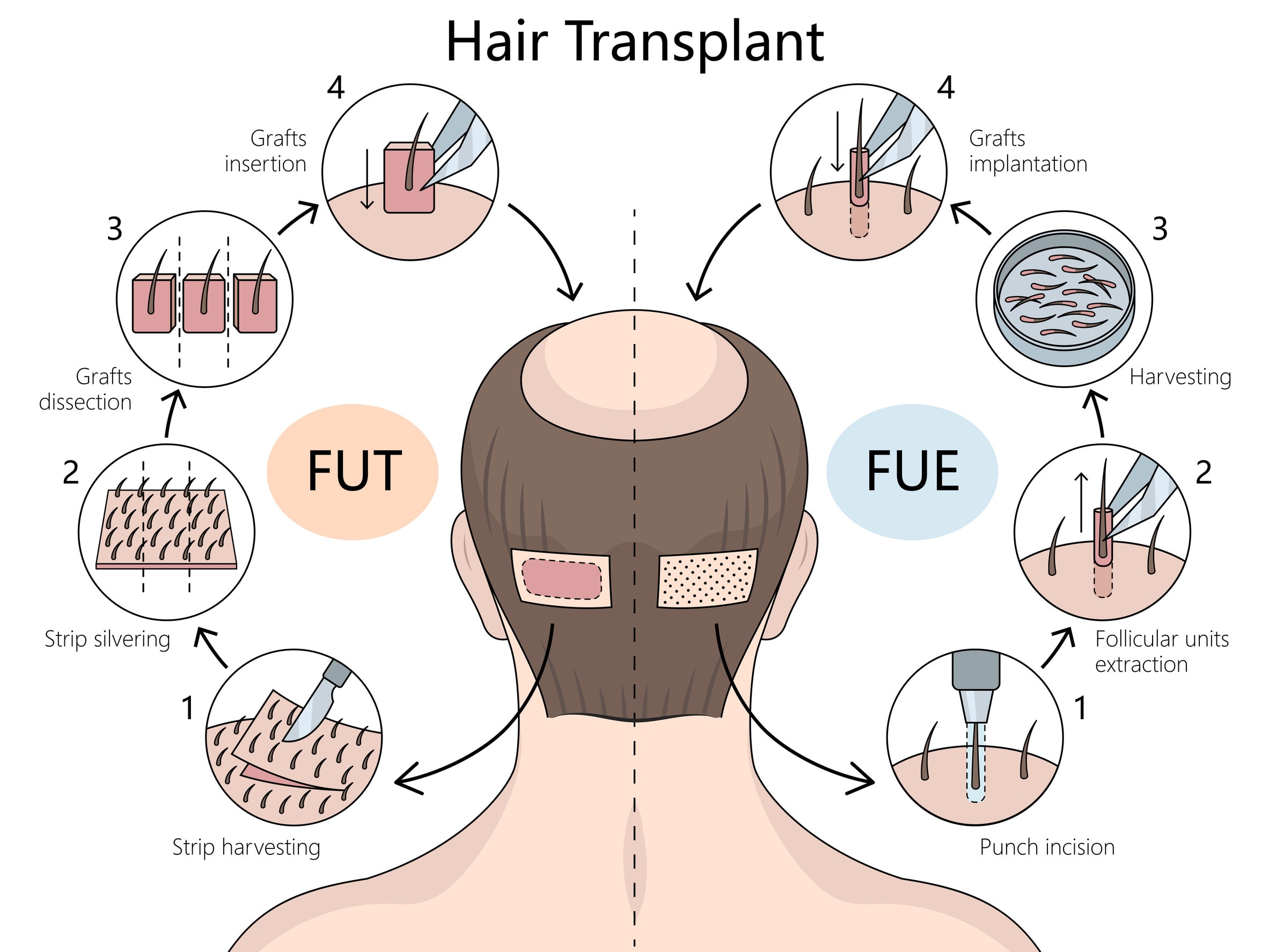
There are several hair transplant techniques, each with its own advantages and disadvantages. The two main techniques are FUT (Follicular Unit Transplantation) and FUE (Follicular Unit Extraction), both used to combat baldness by transferring follicles from dense to thinning areas, thus helping to restore hair. You can also find useful information on the official website.
As science and technology advance, new methods have emerged that have improved the efficacy and safety of hair transplants. The use of the Micro FUE technique has significantly reduced the invasiveness and complications associated with hair transplants, making it a popular choice for many patients.
Furthermore, robotic transplantation and the use of stem cells represent significant innovations that offer greater precision and better outcomes.
FUT (Follicular Unit Transplantation) technique
The FUT technique involves extracting a strip of scalp from the occipital region , which is then divided into individual follicular units for transplantation. This method allows for the transplantation of large numbers of follicles, up to approximately 10,000 units, in a single session .
One of the main advantages of FUT is the trichophytic suture , which allows for an almost invisible scar.
However, a potential disadvantage is that scarring may be more noticeable than with the FUE technique, making FUT more suitable for those requiring large numbers of grafts . The stitches are removed approximately two weeks after surgery.
In some cases, grafting follicular units using the FUE technique can improve the visibility of the scar after the FUT transplant on the head.
FUE technique (Follicular Unit Extraction)
The FUE (Follicular Unit Extraction) technique is a hair transplant method that involves directly extracting follicular units one by one from the scalp . This method significantly reduces the visibility of scars, making it a popular choice for those who want to wear short hair.
FUE is considered less invasive than FUT and offers a quicker recovery . The choice of technique depends on the patient’s individual needs and the surgeon’s recommendations.
New technologies in hair transplantation
Innovation in hair transplantation has led to the introduction of advanced technologies such as robotic transplantation . This technique offers greater precision and reduces the risk of follicle damage during the procedure.
Another technique involves the use of stem cells , which can contribute to healthier growth of the transplanted hair and improve the quality of the final result.
These new technologies represent a significant breakthrough in hair loss treatment , offering improved results and greater patient satisfaction. As science advances, we can expect further improvements that will make hair transplants even more effective and safe.
Who can have a hair transplant?

Hair transplantation is an ideal solution for many people suffering from hair loss.
Ideal candidates are usually :
- Men and women with androgenetic alopecia
- People who have stable baldness
- People in good general health
- People with burns on the scalp
Hair transplantation is the only long-lasting and effective solution for androgenetic alopecia, offering excellent aesthetic results and a significant improvement in quality of life. However, it is important to carefully evaluate your medical condition and consult a specialized surgeon to determine your suitability for the procedure.
Medical conditions for eligibility
Not everyone is eligible for a hair transplant. Medical conditions such as insulin-dependent diabetes and autoimmune diseases may disqualify a person from being a good candidate for a hair transplant.
Additionally, it should always be considered that even if the transplanted hair does not fall out, thinning may continue in the untreated areas, which can affect the overall appearance.
It is essential that the patient be thoroughly evaluated by an experienced surgeon who can determine whether the procedure is safe and appropriate for their health. Only in this way can a successful operation be guaranteed and associated risks minimized.
Personalized consultancy
A personalized consultation is essential to determine the most appropriate approach for each patient . During the initial consultation, the surgeon assesses the feasibility of the operation and discusses the patient’s expectations, aligning them with the realistic results that can be achieved through surgery.
The consultation not only helps determine suitability for the procedure, but also provides an opportunity to answer any questions the patient may have and provide detailed information on the various aspects of the treatment. This critical step ensures the patient is well-informed and prepared for the procedure.
Hair transplant results and expectations
Hair transplant results can vary greatly from person to person . It’s essential to show photos and case reports from other patients to manage expectations about the transplant outcome.
Each patient may have different results due to factors such as hair quality, color tone, and donor area.
Final hair transplant results are generally visible after 10-12 months . Although hair transplantation is considered a permanent treatment, it is not completely curative. It is important to plan the procedure carefully and have realistic expectations based on age and donor area.
Growth times of transplanted hair
The growth process of transplanted hair begins with temporary shedding that can last several weeks. The scabs typically fall off 7-14 days after surgery. Patients may begin to see signs of hair growth as early as 5 months after surgery.
Visible results are common 6 to 8 months after surgery , but it may take 10 to 12 months to see final results . The grafted hair grows at a rate of approximately 1 centimeter per month .
Duration of results
Hair transplant results can last for many years , offering a significant improvement in appearance. Transplanted hair will not fall out and can be managed like normal hair , but it will never recreate youthful density .
It is important for patients to have realistic expectations regarding the durability of the results and to understand that the quality of the donor area and the skill of the surgeon can influence the final appearance of the transplant.
Risks and complications of hair transplantation
Common side effects
Swelling and numbness can be common side effects after surgery. Some postoperative side effects may include swelling and numbness in the treated area . Postoperative treatment may include medications to reduce these effects.
Most patients experience only mild and temporary side effects . Following your doctor’s instructions can help minimize these effects and ensure a quick and effective recovery.
Rare but serious complications
Although rare, some serious complications can occur during or after a hair transplant. Skin necrosis is a rare complication, but it poses a significant risk that can be reduced with modern surgical techniques. Scalp necrosis is a serious complication, with risks varying depending on the technique used.
Potential complications include damage to the donor area and infection. Careful postoperative follow-up is essential to prevent these complications. Furthermore, it is important to choose an experienced surgeon and a reliable donor.
Hair transplantation, while generally safe, has some rare serious complications that require careful management.
How much does a hair transplant cost in Italy?
The following table shows the average cost of a hair transplant in various European countries and Turkey, specifying the FUT, FUE, HDI, and Mini FUE techniques. Prices are indicative and may vary based on several factors, such as the chosen clinic, the surgeon’s experience, and the number of follicular units transplanted.
| Village | FUT (€) | FUE (€) | HDI (€) | Mini FUE (€) |
|---|---|---|---|---|
| Italy | 4,000 – 7,000 | 4,500 – 8,000 | 5,000 – 8,500 | 4,000 – 7,500 |
| Türkiye | 1,500 – 3,500 | 1,800 – 4,000 | 2,000 – 4,500 | 1,700 – 3,800 |
| Spain | 4,000 – 6,500 | 4,500 – 7,000 | 5,000 – 7,500 | 4,200 – 6,800 |
| Germany | 5,000 – 8,000 | 5,500 – 9,000 | 6,000 – 9,500 | 5,200 – 8,500 |
| France | 5,000 – 8,000 | 5,500 – 9,000 | 6,000 – 9,500 | 5,200 – 8,500 |
| United Kingdom | 6,000 – 10,000 | 6,500 – 11,000 | 7,000 – 11,500 | 6,200 – 10,500 |
| Greece | 3,000 – 5,500 | 3,500 – 6,000 | 4,000 – 6,500 | 3,200 – 5,800 |
| Belgium | 5,500 – 9,000 | 6,000 – 9,500 | 6,500 – 10,000 | 5,700 – 9,200 |
| Netherlands | 5,000 – 8,500 | 5,500 – 9,000 | 6,000 – 9,500 | 5,200 – 8,500 |
| Swiss | 6,500 – 11,000 | 7,000 – 12,000 | 7,500 – 12,500 | 6,700 – 11,500 |
| Poland | 2,500 – 5,000 | 3,000 – 5,500 | 3,500 – 6,000 | 2,700 – 5,200 |
Il costo di un trapianto di capelli in Italia può variare significativamente, da qualche migliaio di euro fino a oltre 10.000 euro, a seconda di vari fattori.
Il prezzo medio per un trapianto di capelli fino a 5000 unità follicolari varia tra 3000 e 6500 euro. Non ci sono costi extra per l’assistenza post operatoria, il che rende il pacchetto complessivo più accessibile.
È importante considerare tutti i fattori che influenzano il costo, come la qualità della clinica, l’esperienza del chirurgo e i servizi inclusi nella tariffa. È consigliabile evitare di scegliere una clinica solo in base al prezzo, poiché costi bassi possono indicare una scarsa qualità del trattamento.
Fattori che influenzano il costo
Diversi fattori influenzano il costo di un trapianto di capelli, tra cui la complessità dell’intervento, il numero di unità follicolari trapiantate, e la reputazione della clinica e del chirurgo. Il costo dovrebbe includere tutte le spese, compresi i controlli pre e post-operatori.
La qualità della struttura sanitaria e delle attrezzature utilizzate può anche influenzare il costo finale. È importante scegliere una clinica che offra un buon equilibrio tra qualità e prezzo per ottenere i migliori risultati.
Opzioni di pagamento
Molte cliniche offrono piani di pagamento rateali per rendere il trapianto di capelli più accessibile. Alcune strutture prevedono dilazioni fino a 12 mesi per il pagamento del trattamento, permettendo ai pazienti di gestire meglio le spese.
Il trapianto di capelli è sicuro?
Il trapianto di capelli è generalmente considerato sicuro. Tuttavia, è fondamentale che venga eseguito da chirurghi esperti in strutture appropriati.
La procedura offre un’alta percentuale di successo, superiore al 90%, se eseguita da professionisti esperti. Durante il trapianto di capelli, viene utilizzata anestesia locale per garantire il comfort del paziente.
Seguire norme e protocolli di sicurezza durante il trapianto di capelli è fondamentale per garantire la salute del paziente. Condizioni come diabete in trattamento insulinico, gravi cardiopatie e malattie autoimmuni possono controindicare l’intervento.
Standard di sicurezza
Le cliniche devono seguire rigorosi standard di sicurezza per garantire che la procedura sia eseguita in modo sicuro e efficace. È fondamentale che il personale medico sia adeguatamente formato e che le attrezzature utilizzate siano moderne e ben mantenute.
Come scegliere la clinica giusta
When choosing a hair transplant clinic, it’s crucial to check the credentials and experience of the medical staff . Choosing professional doctors at qualified clinics is essential for achieving the best results .
Contacting clinics with an established reputation and reading reviews from previous patients can help you make an informed choice.
Ensuring that your clinic offers adequate post-operative care and scheduled follow-ups is equally important to ensure optimal recovery.
Conclusion
In conclusion, hair transplantation represents an effective and long-lasting solution for hair loss, offering significant aesthetic results and an improved quality of life. It is essential to be well-informed about the different techniques available, their risks and complications, and the associated costs.
FAQ
Who is an ideal candidate for hair transplantation?
An ideal candidate for a hair transplant is a person, male or female, with androgenetic alopecia, stable baldness, and good general health.
How long does it take to see hair transplant results?
Visible results of a hair transplant can be seen 6 to 8 months after the procedure, while final results are generally seen after 10 to 12 months.
What are the main hair transplant techniques?
The main hair transplant techniques are FUT (Follicular Unit Transplantation) and FUE (Follicular Unit Extraction). These methods achieve effective results in restoring hair density.
How much does a hair transplant cost in Italy?
The cost of a hair transplant in Italy ranges from a few thousand euros to over 10,000 euros, with an average of between 4,000 and 7,000 euros.
Is hair transplantation safe?
Hair transplantation is considered safe when performed by qualified professionals in appropriate settings. It is recommended to choose reputable facilities to ensure the best results.
